太阳成8722Hytran Biotechnology Co., Ltd.
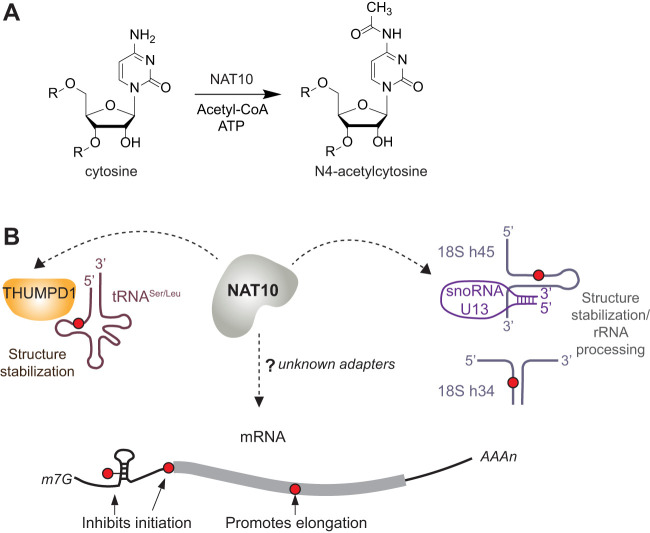
乙酰化修饰(Acetylation)RNA乙酰化是指在N-乙酰胞嘧啶修饰酶催化下RNA的N4 位乙酰胞嘧啶发生乙酰化(ac4C),是一种普遍存在的转录后修饰,广泛存在于mRNA、tRNA、rRNA、snoRNA和非编码RNA中,对RNA稳定性和功能发挥重要的作用。RNA乙酰化最初在tRNA和rRNA中被鉴定,但最近RNA乙酰化研究重点则转移到mRNA。N-乙酰转移酶10(NAT10)是目前唯一发现的RNA乙酰转移酶(Writer),而去RNA乙酰化酶(Eraser)和RNA乙酰识别蛋白(Reader)尚未明确1。 RNA acetylation refers to the acetylation of N4-acetylcytosine (ac4C) in RNA catalyzed by N-acetylcytosine modifying enzymes. It is a ubiquitous post-transcriptional modification widely present in mRNA, tRNA, rRNA, snoRNA, and non-coding RNA, playing a crucial role in RNA stability and function. RNA acetylation was initially identified in tRNA and rRNA, but recent research on RNA acetylation has shifted its focus to mRNA. N-acetyltransferase 10 (NAT10) is currently the only discovered Writer of ac4C, while Eraser and Reader of ac4C have not yet been clearly identified.
图1 RNA乙酰化机制示意图1 Fig.1 Schematic diagram of molecular mechanisms for RNA acetylation1 检测方法(Methods)
应用(Application) 1. 确定靶RNA乙酰化(Identification of target RNA acetylation); 2. RNA修饰测序(Sequencing of modified RNAs)。 客户提供的材料与信息(Materials and information provided by customers): 1、目的RNA信息(Target RNA information); 2、细胞样本(Cells):不低于2×10^7个细胞(No less than 2×10^7 cells); 3、组织样本(Tissues):不低于1g(No less than 1g)。 参考文献(Reference) 1 Schiffers, S. & Oberdoerffer, S. ac4C: a fragile modification with stabilizing functions in RNA metabolism. Rna 30, 583-594 (2024). https://doi.org/10.1261/rna.079948.124 |